Why I wanted to build a bike that doesn’t look like a piece of assistive equipment—and why it’s about much more than just a bike.
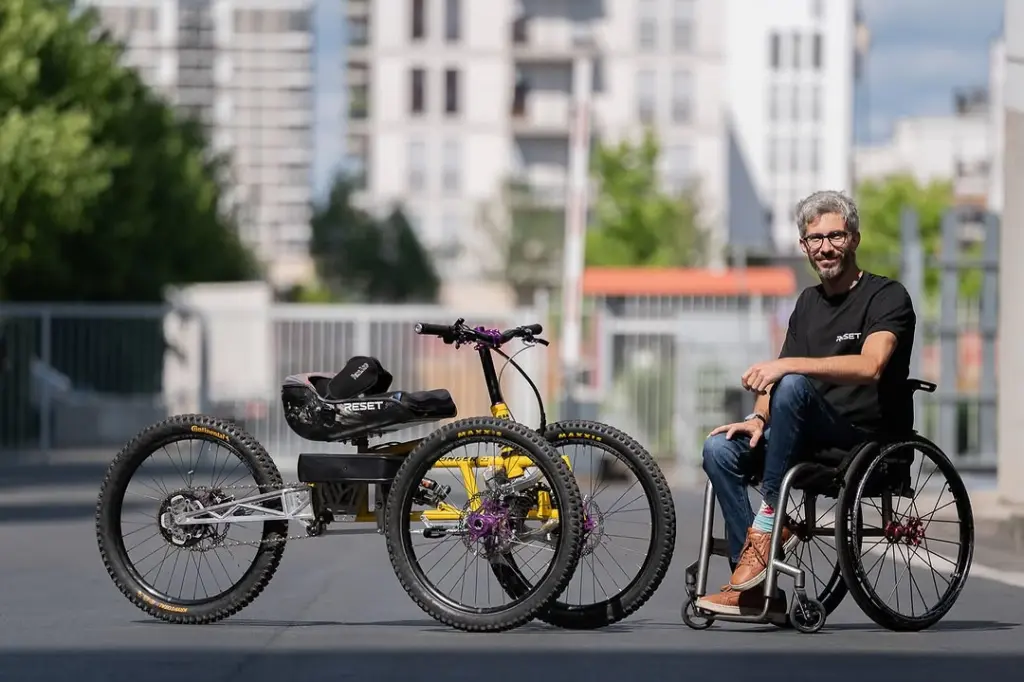
I was in a motorcycle accident in 2020. After that, a lot of things changed. Since then, a complete spinal cord injury at the T7 level has meant life in a wheelchair for me. That is a massive life change—physically, logistically, and sometimes mentally, too.
However, what occupied my thoughts back then almost as much as the new situation itself was something else: the technology that was suddenly at my disposal.
I am a mechanical engineer, and before my accident, I loved spending a lot of time on my bike. So, I was familiar with high-quality sports equipment. I knew what a well-engineered product feels like—one where every detail serves a purpose and performance isn’t just something found on a spec sheet.
And then, suddenly, I was standing on the other side.
I took a look at adaptive sports equipment and was, to be honest, quite disappointed. It was a real letdown for me. A lot of weight, a lot of marketing, and high prices—yet products that made me wonder where the actual technology was that I was supposed to be paying so much money for.
I found that particularly hard to accept when it came to a piece of sports equipment. When you are already living with a physical limitation, you don’t want to feel like you have to make yet another compromise regarding the technology.
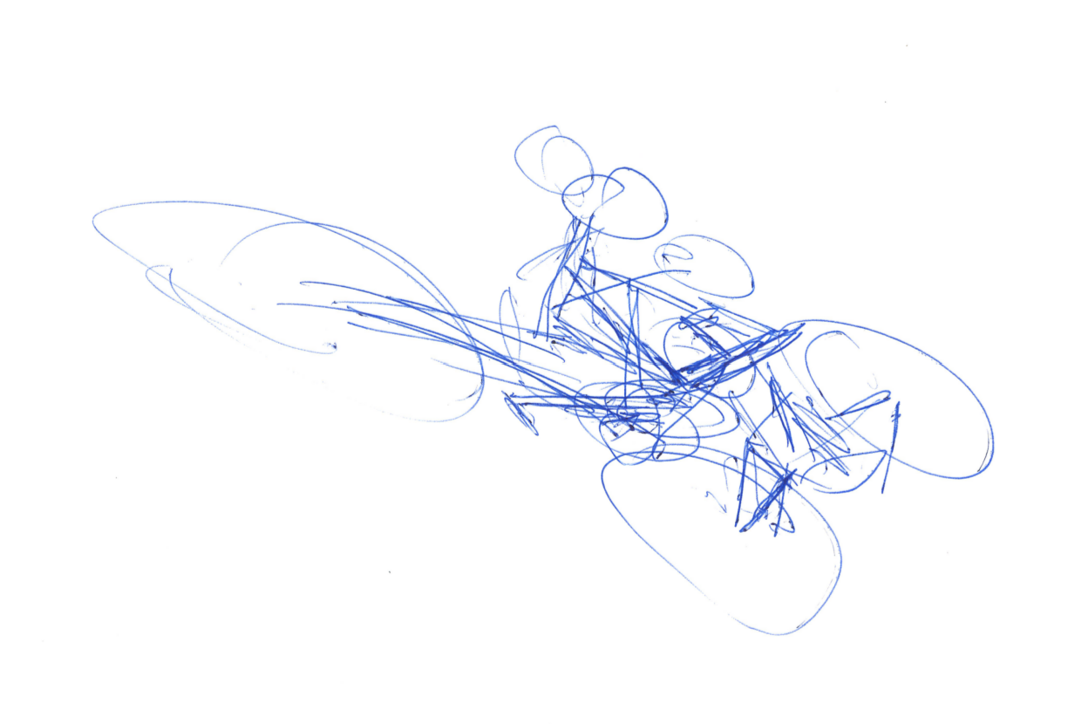
An acquaintance once said to me, “There’s just nothing more to be done.” That statement really struck a chord with me, because I know that the direction your path takes—and how you view the world—is entirely in your own hands. I am an engineer. I knew what was technically possible. And I also knew that my body wasn’t the only system that could be optimized. So, I started building my own bike.
First, find out what is really missing
The first question wasn’t: “How do we build the most awesome bike?” The first question was: “What can I actually compensate for myself, and what does the technology need to handle?” You can train for strength. You can train for stability. You can train movement patterns. But eventually, you reach a point where the body can go no further. That is precisely where a good technical system needs to step in. That distinction remains important to me to this day. A “handicap” is a physical limitation. A “disability,” however, often arises elsewhere—in the mind and through the labels others impose. That’s why I’m not particularly interested in how well a product makes a disability visible. I’m interested in how well it renders it irrelevant. My personal goal was quite simple: I wanted to go to the bike park with my friends and hear them say afterwards, “Wow, man. You aren’t any slower.” Not out of pity. Not as an inspiration.
Simply because I can come along.
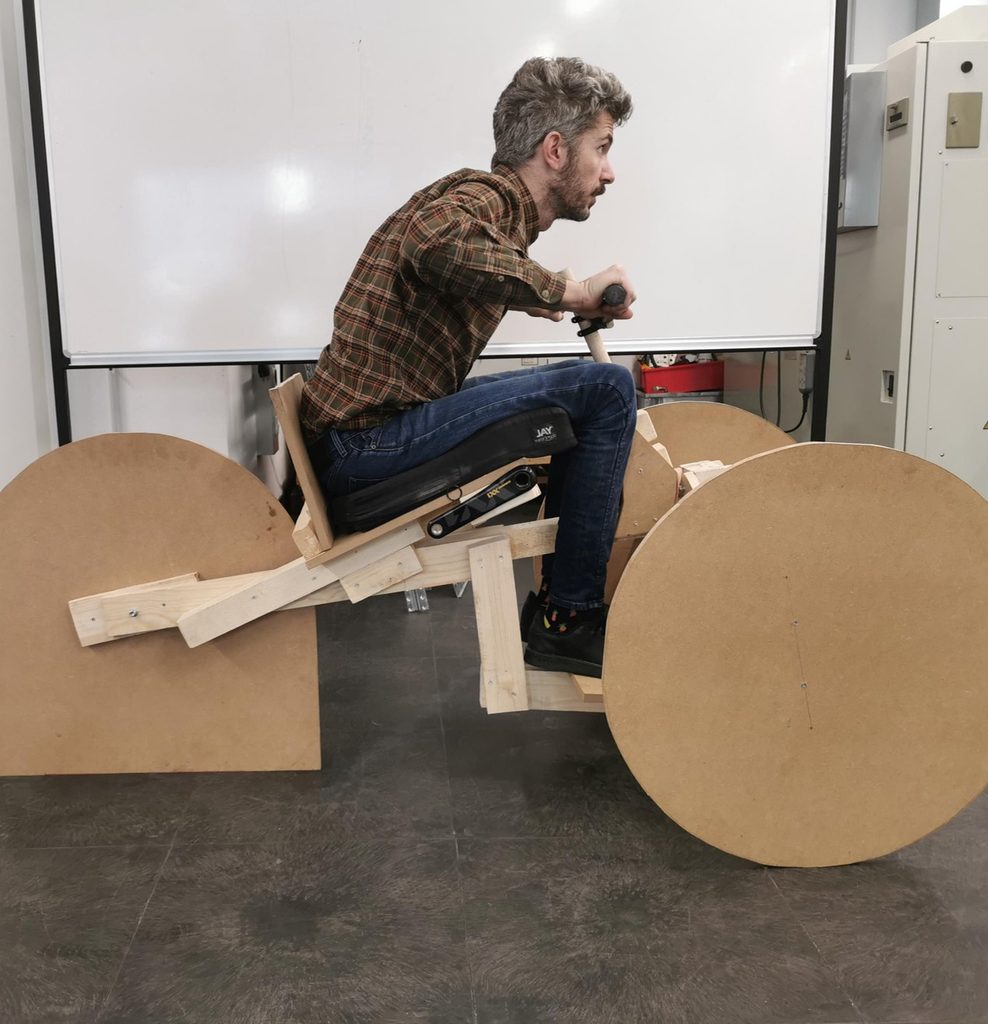
The first attempt was a bit of a flop.
To me, the first prototype looked fantastic—if only because it actually existed. It was an enabler. For the first time, I had something in front of me that allowed me to envision doing things again that I had previously taken for granted: riding, jumping, being outdoors. From a technical standpoint, however, the thing was a long way from being good. Not enough stability. The wrong kind of bracing. Insufficient motor power. Things that seem to work fine on paper can get pretty interesting—in a hurry—when you’re actually riding down a slope.
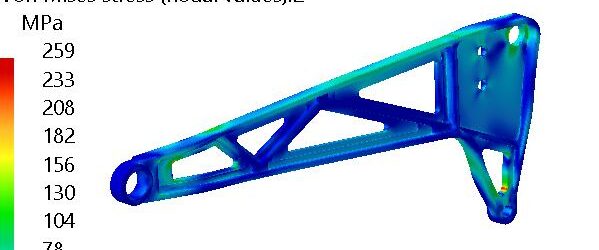
So we started deconstructing what wasn’t working. My father was involved, and later Thomas—my business partner—joined in. We crunched numbers, built, tested, scrapped ideas, and started over. Eventually, that DIY project slowly evolved into a real product. One aspect was particularly important to me: weight. In the adaptive cycling world, bikes weighing 45 kilograms or more are not uncommon. That can amount to nearly half a rider’s body weight. To me, that was absurd. A bike designed to give you more independence shouldn’t become a problem in itself. Weight affects everything: acceleration, agility, handling, transport, and safety. When you’re out on a trail, you feel every single kilo. So, we completely reimagined the heavy steel frame of the first prototype, planning a design that combined thin-walled steel tubing with CNC-machined aluminum parts. Simulating critical components allowed us to reduce the total mass even further—not just to make the numbers look good on a website, but because we wanted to know exactly where material was truly needed and where it wasn’t. Countless hours of manual craftsmanship went into the process, too. For a long time, the bike looked exactly like what it was: a DIY build. But at some point, we stood back and realized: it actually looks like a finished product.
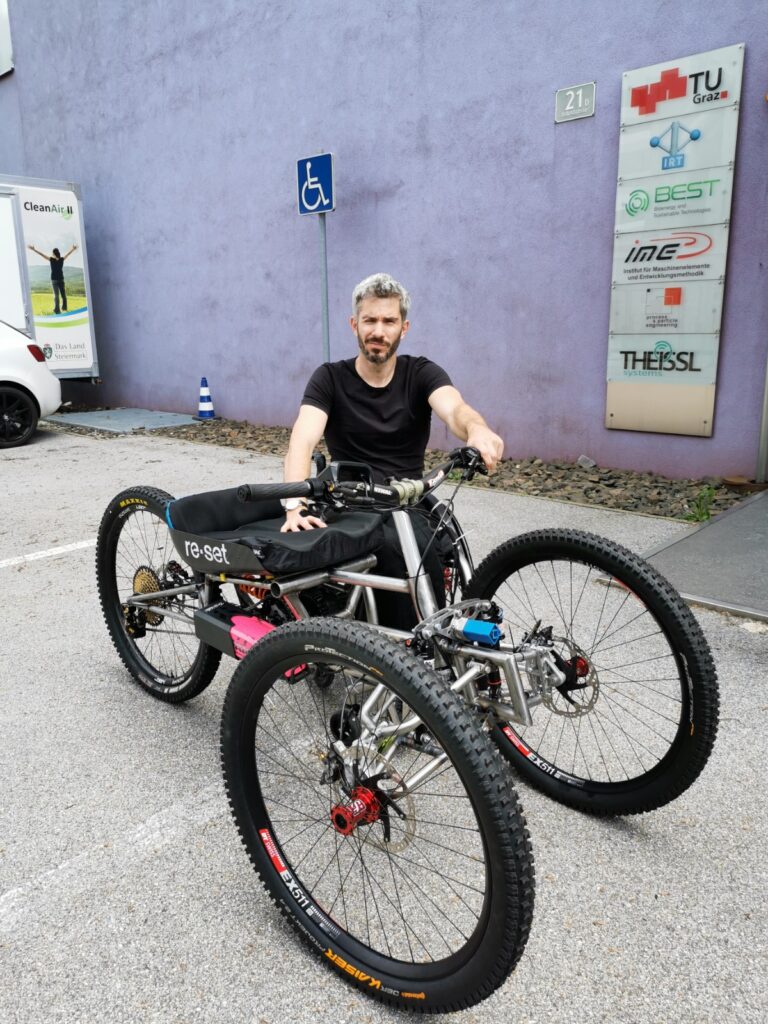
Die Requirements List
The further we progressed, the more people had an opinion on what ought to work. That’s pretty normal with new ideas. Some of those insights were helpful; others, less so. Eventually, I stopped letting individual opinions guide me and instead kept referring back to our requirements list. What did the bike need to do? What did it need to withstand? How should it handle? How light did it need to be? How compact? How should it behave on a jump?
And above all: What needs to happen so that I don’t just get somewhere with it, but actually have fun?
That was the benchmark, since it was a completely new concept and there were no comparable vehicles.
A bike that doesn’t look like an assistive device
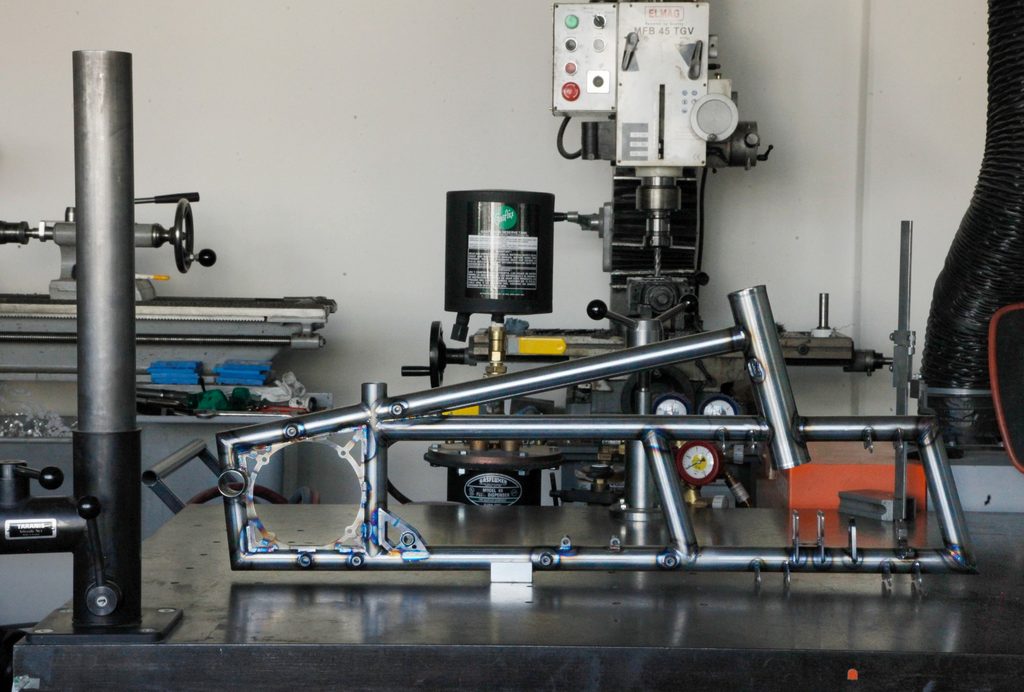
I never wanted to build a bike that screams “a person with a disability is sitting here” at first glance. I wanted to build a bike that makes people think, “What an awesome machine!” That’s why the lifestyle aspect is part of it for me, too.
Sports equipment and everyday life don’t have to be mutually exclusive. That might sound like a minor detail, but when you have a disability, it is often not as simple as it should be. After all, a vehicle for people with disabilities must also offer the option of taking along mobility aids (wheelchairs, crutches, etc.)—and there is one thing that must not be forgotten:
It can look really awesome.

Security does not mean enclosing everything
Another key element that has been the subject of much thought and discussion is security.
The answer to this isn’t to encase the rider in a rigid structure—like a roll cage—which would add weight and restrict mobility. Crashes are simply part of mountain biking; the real question is what happens when one occurs. We opt for an open seat shell with a low backrest. It provides support while still allowing the upper body freedom of movement. At first glance, this might not seem like a safety feature. However, if you can rotate away from the vehicle and your upper body remains free enough to move, brace yourself, or roll during a fall, a different safety concept emerges. Active movement—rolling with the vehicle—combined with a lightweight design and extremely powerful brakes, enables safe riding (active safety) and allows the body to rotate away from hard obstacles like roots or rocks in the event of a crash.
Not maximum restriction, but controlled freedom.
That’s why the Ranger is more than just a bike
I didn’t want to build a device that was unnecessarily complex. It had to be a vehicle that was lightweight, compact, and precise—one that stays balanced during jumps and reacts quickly on uneven terrain; one where the handlebars form the widest point. A design that instantly catches the eye and thrills you the moment you look at it. To me, that is good engineering. Yet technology is never the end in itself; it is the means. The goal is for you to get out there and have a good time—a truly great time. That is exactly why the project is called RESET.
We cannot change the past, but an accident is not the end of the story. Sometimes, this is the point where you have to start rethinking things.
I refused to accept a situation where “nothing works anymore.” That’s why I started building a bike designed to get as much working again as possible.
So, what now? Now we show that design, quality, and a fair price don’t have to be mutually exclusive. Not with big promises, but with a truly well-thought-out adaptive mountain bike.
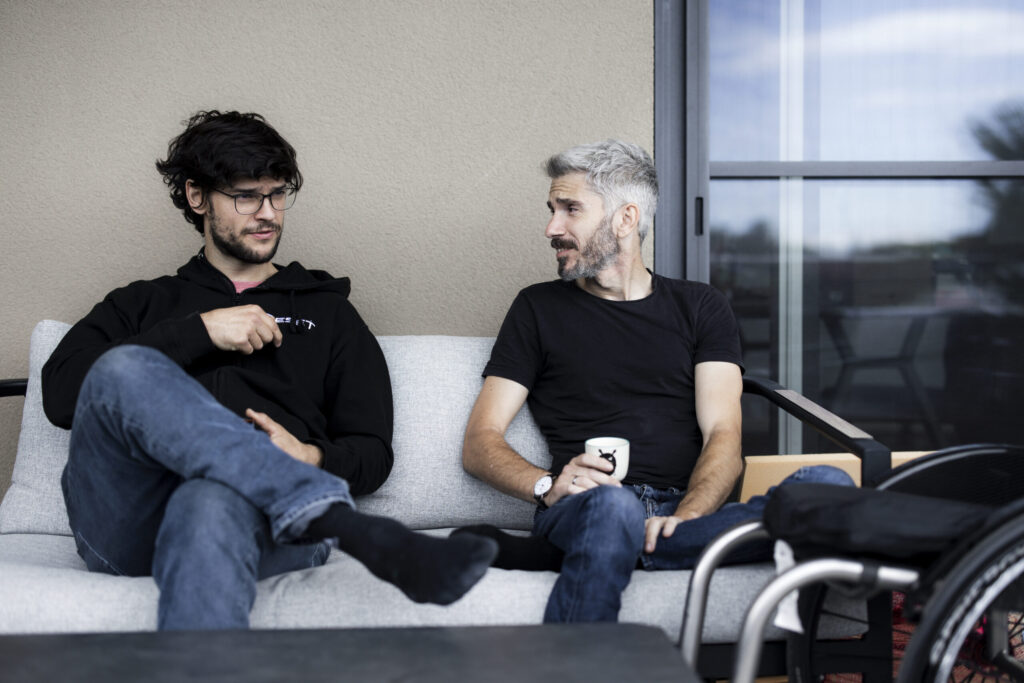
And then there was Thomas.
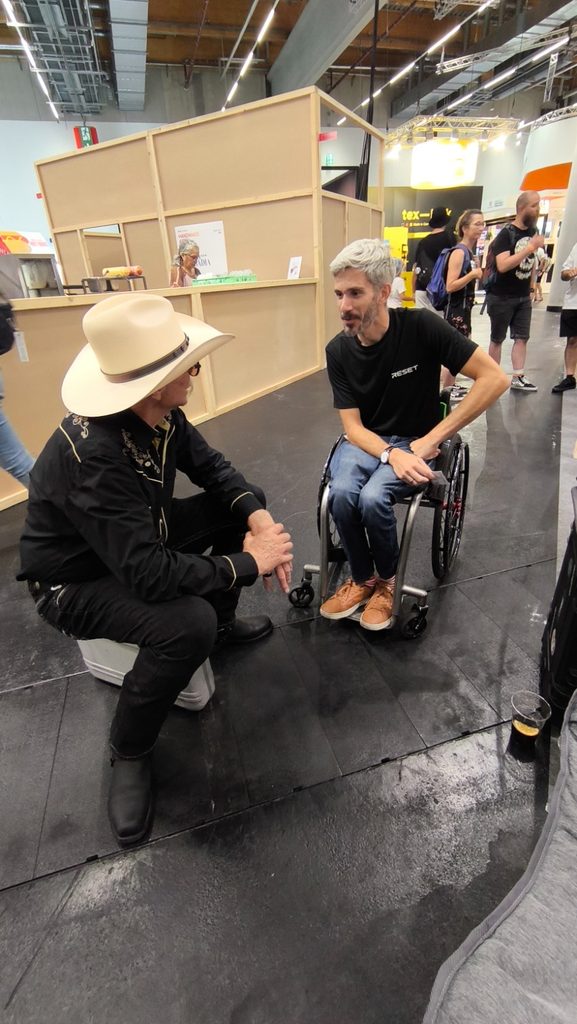
A bike like the Ranger doesn’t come into existence in isolation. At some point along the way, Thomas came on board. Initially, he was just someone I discussed the project with. Then, he became someone who contributed ideas, challenged assumptions, experimented, and consistently rolled up his sleeves to help. Eventually, it became clear: we were doing this together. Thomas didn’t just go through the process with me—he contributed an incredible amount. He brought ideas, time, patience, expertise, and, above all, the willingness to keep going even when things failed time and again. After all, developing a product from scratch involves more than just having good ideas. It means making decisions, discarding concepts, questioning compromises, and sometimes simply pressing on without knowing what the next solution will look like. That requires a partner who doesn’t just stand on the sidelines but is truly in it with you. For me, Thomas is exactly that kind of partner.
That is why one thing, above all, belongs here: Thank you, Thomas.
Thank you for everything you contributed. For the many hours of work that are no longer visible in the finished component. For the discussions, the tests, the setbacks, and the moments when an idea slowly turned into something real. Without you, the Ranger wouldn’t be the bike it is today. And in all likelihood, it wouldn’t have come into existence at all.